Showing posts with label ********. Show all posts

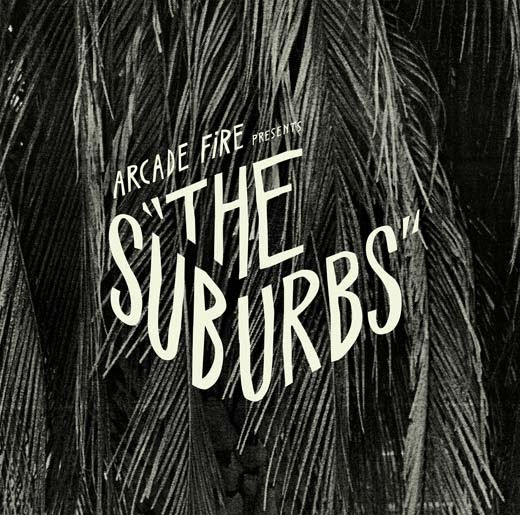
Arcade Fire [2010] The Suburbs

[01] The Suburbs
[02] Month Of May


rollingstone: "2009, 2010/Wanna make a record how I felt then," sings Win Butler on "Month of May." As usual, the Arcade Fire frontman is feeling a lot. Childhood nostalgia, suburban ennui, parenthood, war, death – these are just some of the themes crammed into the songs on Arcade Fire's fabulous new double-sided 12-inch single. "The Suburbs" is a piano-fueled shuffle that starts dreamy and then turns vaguely paranoid as it looks back at a teenage wasteland with longing and amusement: "You always seemed so sure/That one day we'd be fighting/In a suburban war. . . ./But by the time the first bombs fell/We were already bored." "Month of May" is a furious punk boogie about disaffected kids that suggests a Crazy Horse-backed Neil Young shaking a fist at America's listless youth. Both songs reveal a band looking more and more like Springsteen's and U2's rightful heirs, with an undiminished appetite for grandeur – big themes, big emotions and an even more potent sound.
(rollingstone 8/10)

Al Jarreau [2008] Love Songs

[01] We're In This Love Together
[02] Teach Me Tonight
[03] So Good
[04] After All
[05] Wait For The Magic
[06] Your Song
[07] Heaven And Earth
[08] Through It All
[09] Let It Rain
[10] Not Like This
[11] Brite 'n' Sunny Babe
[12] Secrets Of Love
[13] My Foolish Heart
[14] Goodhands Tonight

Featuring [09] Patti Austin and George Benson


amg: It's kind of surprising that Al Jarreau's catalog hasn't been treated with greater care. Best of Al Jarreau, released by Warner Bros. back in 1996, remains the best anthology of Jarreau's career, and the various Love Songs series put together by different labels have tended to exist merely as a way to take advantage of the Valentine's Day market (Sony BMG released a Love Songs comp for the Bay City Rollers, of all artists), but this particular Love Songs is more than something to fill the shelves, compiling many of Jarreau's biggest hits released from 1976 through 2006. Since it skips across 30 years, a number of favorites are bound to be missing — "Your Precious Love," "Since I Fell for You," and "Moonlighting," for instance. Even so, this covers the basics rather well.
(amg 8/10)

Arcade Fire [2007] Neon Bible

[01] Black Mirror
[02] Keep The Car Running
[03] Neon Bible
[04] Intervention
[05] Black Waves - Bad Vibrations
[06] Ocean Of Noise
[07] The Well And The Lighthouse
[08] (Antichrist Television Blues)
[09] Windowsill
[10] No Cars Go
[11] My Body Is A Cage


amg: When Montreal's Arcade Fire released Funeral in 2004, it received the kind of critical and commercial acclaim that most bands spend their entire careers trying to attain. Within a year the group was headlining major festivals and sharing the stage with U2 and New York City's "two Davids" (Bowie and Byrne), all the while amassing a devoted following that descended upon shows like sinners at a tent revival, engaging in the kind of artist appreciation that can easily turn to a false sense of ownership. On their alternately wrecked and defiant follow-up, Neon Bible, one can sense a bit of a Wall being erected (Win Butler's Roger Waters/Bruce Springsteen/Garrison Keillor-style vocal delivery notwithstanding) around the group. If Funeral was the goodbye kiss on the coffin of youth, then Bible is the bitter pint (or pints) after a long day's work. The brooding opener, "Black Mirror," with its sinister "Suffragette City"-inspired groove and murky refrain of "Mirror, Mirror on the wall/Show me where them bombs will fall," sets an immediate world-weary tone that permeates that majority of Neon Bible's Technicolor pages. As expected, those sentiments are amplified with all of the majestic and overwrought power that has divided listeners since the group's ascension to indie rock royalty, but despite a tendency toward midtempo balladry and post-fame cynicism, they're anything but dull. It's the triumphant orchestral remake of live staple "No Cars Go" and the infectious "Keep the Car Running" — the latter sounds like a 21st century update of John Cafferty & the Beaver Brown Band's "On the Dark Side" — that will most appeal to Funeral fans, and when the bottom drops out a minute and a half into the pipe organ-led "Intervention" and Butler wails "Who's gonna reset the bone," it's hard not get caught up in all of the dystopian fervor. "Black Wave/Bad Vibrations" and "The Well and the Lighthouse" continue the band's explorations into progressive song structures and lush mini-suites, the thunder-filled "Ocean of Noise" is reminiscent of Bossanova-era Pixies, and the stark (at first) closer "My Body Is a Cage" straddles the sawhorse of earnest desperation and classic rock & roll self-absorption so effortlessly that it demands to be either turned off or all the way up. Neon Bible takes a few spins to digest properly, and like all rich foods (orchestra, harps, and gospel choirs abound), it's as decadent as it is tasty — theatricality has never been a practice that the collective has shied away from — but there's no denying the Arcade Fire's singular vision, even when it blurs a little.
(amg 8/10)

America [2006] Here & Now

[01] Chasing The Rainbow
[02] Indian Summer
[03] One Chance
[04] Golden
[05] Always Love
[06] Ride On
[07] Love & Leaving
[08] Look At Me Now
[09] This Time
[10] Work To Do
[11] All I Think About Is You
[12] Walk In The Woods
[13] Ventura Highway
[14] Don't Cross The River
[15] Daisy Jane
[16] I Need You
[17] Tin Man
[18] Muskrat Love
[19] Woman Tonight
[20] Only In Your Heart
[21] Lonely People
[22] Sandman
[23] Sister Golden Hair
[24] A Horse With No Name


amg: Even during its '70s heyday, soft rock never gained much respect, and of those soft rockers, perhaps no other act received as much disdain as America, a group inspired equally by the folk-rock of Crosby, Stills, Nash & Young and the pop of the Beatles. Aside from epitomizing the qualities that made soft rock anathema for hipsters and rock critics — America, like the style itself, was too smooth, melodic, and square to be considered cool — it's quite likely that the band received the brunt of the criticism because they wore their influences too plainly: their 1972 number one hit "A Horse with No Name" sounded uncannily like Neil Young, and they were produced by the fifth Beatle, George Martin, two moves that made it appear to some that America was acting as heirs to a throne that they did not deserve. They were also seen, along with fellow California soft rockers the Eagles, as diluting and perverting the ideals of folk-rock, turning it into bland pap for the masses, and they were scorned by the taste-makers for it: the second edition of the Rolling Stone Record Guide rated all their studio albums between zero and one stars, while Robert Christgau rated their 1975 compilation History: America's Greatest Hits a C-. America may not have been acclaimed, but they were popular, with "Ventura Highway," "A Horse with No Name," "Tin Man," "Lonely People," and "Sister Golden Hair" all reaching the Billboard Top Ten in the first half of the '70s, all on the strength of their impeccable melodic craft and easy, sunny vibes — qualities that turned out to be enduring, too, as these songs remained staples on oldies and soft pop stations well into the new millennium, earning new fans along the way, fans who weren't preoccupied with America's image and enjoyed the music on its own mellow terms. Among these fans were Gen-Xers like Adam Schlesinger of Fountains of Wayne and former Smashing Pumpkin James Iha, whose 1998 solo debut, Let It Come Down, was bathed in a hazy, sunny glow that was unmistakably reminiscent of America. Generation X was notorious for ironically embracing and reviving '70s icons, but there was no trace of irony behind Schlesinger and Iha's love of America, as their production of Here & Now, America's 16th studio album and first unabashed attempt at a comeback, proves. Schlesinger and Iha achieve something remarkable with Here & Now: they leave no fingerprints behind. The duo helms a production that is on paper a textbook indie rock hipster comeback record — complete with cameos by Ryan Adams and Ben Kweller and covers of My Morning Jacket and Nada Surf — but the finished album never sounds self-conscious or cloying, it sounds true to the sound and spirit of America. From the warm, welcoming production to the sweet harmonies, mellow vibes, and smooth melodies, Here & Now could easily be mistaken for an America album from the mid-'70s. There has been no attempt to modernize the group; Schlesinger and Iha have merely brought Gerry Beckley and Dewey Bunnell back to their strengths. Gone are the heavy layers of synthesizers that plagued America since the early '80s; gone are the earnest but meandering adult pop that made such '90s albums as Hourglass and Human Nature underwhelming. In their place are layers of melody and harmony presented simply and cleanly through songs that so easy to enjoy that it's easy to overlook how well constructed they are. This understated craft also means that Here & Now does not produce any revelations about the band or how they influenced the modern musicians who wisely blend into the background here, but the quiet nature of this album fits comfortably with the best of the band's work. Indeed, like the hits that are still heard on oldies radio — and are also revived here in a live bonus disc, where Beckley and Bunnell perform every song on History — the songs on Here & Now are appealing upon first listen but reveal their true strength upon repeated spins, as the melodies begin to catch hold in the subconscious and the warmth of the music feels friendly and familiar. On these repeated listens, Here & Now gains stature and it not only feels like a successful comeback, but the record that America fans of all ages have been waiting decades to hear.
(amg 8/10)
Audioslave [2006] Revelations

[01] Revelations
[02] One And The Same
[03] Sound Of A Gun
[04] Until We Fall
[05] Original Fire
[06] Broken City
[07] Somedays
[08] Shape Of Things To Come
[09] Jewel Of The Summertime
[10] Wide Awake
[11] Nothing Left To Say But Goodbye
[12] Moth


amg: Given the short distance separating Audioslave's second album, Out of Exile, in 2005 and their third, Revelations, in 2006, it's easy to assume that the Rage Against the Machine/Soundgarden supergroup has finally turned into an actual working band — either that or the group is working hard to get to the end of their contract so they can go their separate ways (a suspicion stoked by the flurry of Chris Cornell-centric press surrounding its release, including the announcement that he's recording a solo album and will be singing the theme song for the new James Bond film, Casino Royale, on his own). Whether or not either theory is proven true over time doesn't change the fact that Revelations builds upon Out of Exile, sounding even more like the work of a genuine band than its predecessor. In light of this record, Out of Exile feels driven by Cornell, which itself was a shift away from the Rage-driven debut. Here, the two are integrated fully into a distinctive sound, one that's tight and focused, one that's aggressive but not overly heavy. Also, Audioslave has become increasingly rhythm-driven instead of riff-driven; even on the slower songs and heavy rockers, the pulse and pull of the rhythm defines the song more than the riff. Given this emphasis on rhythm, it's not a surprise that Audioslave displays an overt funk and soul influence here, ranging from the hard funk of "One and the Same" to the Motown homage of "Original Fire." This not only makes Revelations sound like the result of a working band, one that likes to jam together, but it also gives it a lighter feel in its tone, a feeling that Cornell runs with on his lyrics and singing, which are considerably less tortured and brooding than before. All this doesn't necessarily make Revelations a fun album — making music is serious work for Audioslave and they expect the same from their audience — but it does make for their most colorful, diverse, and consistent record yet.
(amg 8/10)

Al Stewart [2005] A Beach Full Of Shells

[01] The Immelman Turn
[02] Mr. Lear
[03] Royal Courtship
[04] Rain Barrel
[05] Somewhere In England
[06] Katherine Of Oregon
[07] Mona Lisa Talking
[08] Class Of `58
[09] Out In The Snow
[10] My Egyptian Couch
[11] Gina In The King Road
[12] Beacon Street
[13] Anniversary


amg: Al Stewart has always had a distinctive vocal style — making his radio hits like "Year of the Cat" immediately recognizable — while also possessing a knack for writing tuneful pop songs. A Beach Full of Shells qualifies as his first U.S. release since 1995, and while it's been some time since the singer conquered the pop charts, both his vocal style and craftsmanship remains intact. It would be a mistake, however, to view Stewart as no more than the maker of pop confections specially designed for a mass radio audience. The cover of A Beach Full of Shells offers the first clue of a playful mind that enjoys the weight of words: there are two types of shells on the beach, one from the sea, the other for use in a gun. The complexity of his approach is best experienced on "Somewhere in England 1915," a lengthy song (nearly seven minutes) with shifting dream imagery. Weaving fantasy with brief references to World War I, the narrator eventually wakes up 90 years later to find himself on the edge — the song seems to suggest — of yet another war. Stewart accomplishes all of this without ever being obvious, giving the song a subtle quality as it reveals its surprises to the listener. This, however, is only one of many moods on A Beach Full of Shells. "Katherine of Oregon" is as light as air, a pleasant, flowing ballad with nice acoustic guitar and light percussion, while "Mona Lisa Talking" shifts through a number of intriguing chord changes to offer a little common sense advice. A Beach Full of Shells probably doesn't spell Stewart's return to the Top 40, but it is a solid effort that will certainly please fans.
(amg 8/10)

Audioslave [2005] Out Of Exile

[01] Your Time Has Come
[02] Out Of Exile
[03] Be Yourself
[04] Doesn't Remind Me
[05] Drown Me Slowly
[06] Heaven's Dead
[07] The Worm
[08] Man Or Animal
[09] Yesterday To Tomorrow
[10] Dandelion
[11] #1 Zero
[12] The Curse


amg: Given that most supergroups last little longer than a single album, it was easy to assume that Audioslave — the pairing of Soundgarden vocalist Chris Cornell and the instrumental trio at the core of Rage Against the Machine — was a one-off venture. That suspicion was given weight by their eponymous 2002 debut, which sounded as if Cornell wrote melodies and lyrics to tracks RATM wrote after the departure of Zack de la Rocha, but any lingering doubts about Audioslave being a genuine rock band are vanished by their 2005 second album, Out of Exile. Unlike the first record, Out of Exile sounds like the product of a genuine band, where all four members of the band contribute equally to achieve a distinctive, unified personality. It's still possible to hear elements of both Rage and Soundgarden here, but the two parts fuse relatively seamlessly, and there's a confidence to the band that stands in direct contrast to the halting, clumsy attack on the debut. A large part of the success of Out of Exile is due to the songs, which may be credited to the entire group but are clearly under the direction of Cornell, sounding much closer to his past work than anything in Rage's catalog. Even the simple riff-driven rockers are tightly constructed songs with melodies and dramatic tension — they lead somewhere instead of running in circles — while the ballads have a moody grace and there's the occasional left-field surprise like the sunny, sweet psych-pop gem "Dandelion"; it's the strongest set of songs Cornell has written in a decade. Which is not to say that Out of Exile is without excesses, but they're almost all from guitarist Tom Morello; his playing can still seem laborious, particularly when he clutters single-string riffs with too many notes (the otherwise fine opener, "Your Time Has Come," suffers from this), and his elastic stomp box excursions verge on self-parody on occasion. Still, these are isolated moments on an album that's otherwise lean, hard, strong, and memorable, a record that finds Audioslave coming into its own as a real rock band.
(amg 8/10)

Antony And The Johnsons [2005] I Am A Bird Now

[01] Hope There's Someone
[02] My Lady Story
[03] For Today I'm A Boy
[04] Man Is The Baby
[05] You Are My Sister
[06] What Can I Do
[07] Fistful Of Love
[08] Spiralling
[09] Free At Last
[10] Bird Guhl


amg: Antony and the Johnsons' second full-length recording, the haunting and affecting I Am a Bird Now, is a far more intimate affair than their debut. Antony's bluesy parlor room cadence is more upfront here, resulting in a listening experience that's both exhilarating and disquieting. "Hope There's Someone" is a somber opener, and its plea for companionship, augmented by a sparse piano/vocal arrangement that rises into the air by song's end in a swirl of multi-tracked harmonies, is ultimately uplifting. This formula is applied to much of the record and never ceases to elicit honest emotion from either Antony or his numerous guests. Rufus Wainwright takes the lead on "What Can I Do?," a languid meditation on death that conjures up images of rainy streets, lonely lampposts, and cigar smoke — it's brief (under two minutes) but alluring like the cover of a Raymond Chandler novel. Boy George joins Antony for a duet on the soulful and empowering "You Are My Sister," Devendra Banhart lends his warbly tenor to the lush "Spiraling," and Lou Reed plays noodly guitar and recites an anonymous poem on the mischievous "Fistful of Love." It's a testament to Antony's skill as a writer and arranger that these guest appearances are completely devoid of pretense, and while each artist is reverent to the source material, it's still Antony's show, as the most powerful moments on I Am a Bird Now are his.
(amg 8/10)

Alanis Morissette [2004] So-Called Chaos

[01] Eight Easy Steps
[02] Out Is Through
[03] Excuses
[04] Doth I Protest Too Much
[05] Knees Of My Bees
[06] So-Called Chaos
[07] Not All Me
[08] This Grudge
[09] Spineless
[10] Everything


amg: Alanis Morissette has often written about affairs of the heart, but she's rarely written from the perspective of being in love, and she's certainly never recorded an album where she seems so in love and at peace as she has with her fourth album, So-Called Chaos. She doesn't hide her romance with Canadian actor Ryan Reynolds, perhaps best known as the title role of National Lampoon's Van Wilder, thanking him in the liner notes and alluding to their relationship throughout this romance-heavy record. There are still strands of bitterness, cynicism, and jealously, yet they feel like unfinished business that she's slowly putting to rest. Nowhere is this more true than on "This Grudge," which for all intents and purposes looks like the final chapter in the tale of "The Relationship," the one that fueled "You Oughta Know," since she acknowledges that she's held "this grudge" for "14 years, 30 minutes, 15 seconds" and through "11 songs" and "four full journals" (and, given Alanis' penchant for confession and single-minded obsession, chances are she's not exaggerating). She's not just leaving this relationship behind, she's maturing, and there's a calm directness to much of her writing that leads her to both open-hearted love songs and, occasionally, a sly sense of humor (as on the sardonic opener, "Eight Easy Steps"). Morissette still has a tendency to overwrite and then deliver these tangled tenses in exceedingly odd phrasing — the chorus to "Knees of My Bees" doesn't sound much like "tremble and buckle," it sounds for all the world like "jambalaya, Bucko!" — but that's simply par for the course with Alanis. What's unexpected, though, is the confidence of her music, which recaptures some of the vigor of Jagged Little Pill, as it's brighter, denser, catchier than either of its immediate predecessors, and boasts her most assured singing yet. Even with all this, it's not heavy on immediate singles — the first, "Everything," takes awhile to have its hook settle in — but as an overall record, it's her most satisfying since her blockbuster breakthrough.
(amg 8/10)

Ash [2004] Meltdown


[01] Meltdown
[02] Orpheus
[03] Evil Eye
[04] Clones
[05] Starcross'd
[06] Out of the Blue
[07] Renegade Cavalcade
[08] Detonator
[09] On a Wave
[10] Won't Be Saved
[11] Vampire Love


amg: By Meltdown, Ash were establishing a pattern: each odd-numbered album has been a difficult, rockier affair, while each even-numbered album showed off their sublimely poppy side. So this being their fifth record, it's easy to guess where Meltdown falls — and if you still hadn't figured it out, just check out the faux-metal cover art! Fans of the unexpectedly great comeback Free All Angels might be worried that this is a return to the minor stumble that was the dark and difficult Nu-Clear Sounds — the last "rock" album — but thankfully Meltdown bursts with the hooks and little musical flourishes that have made the more mature Ash records such a treat, and has little of the meandering malaise that marred Nu-Clear Sounds. Lead single "Orpheus" sets the tone — while the verses rage with '70s metal-derived licks, the choruses burst with one of the sunniest and catchiest tunes that Tim Wheeler and company have ever committed to tape. So while "Clones" and the awkwardly political title track rage as hard as anything they've ever recorded — and admittedly sound a bit more AC/DC than Undertones — there's plenty of good songwriting, like on the sweet (really) "Evil Eye," the staccato guitar work on the verses of "Renegade Cavalcade," or the honest-to-goodness string-laden power ballad "Starcrossed." The real shame is that Kinetic Records went broke just before the album was to be released, again robbing the U.S. of a timely release. But Meltdown's quality justifies a hefty import price tag: it's a surprisingly strong and assured record, the kind that — while not the highest point of the band's catalog — will help shore up their building legacy as one of the most consistent bands to emerge from the British Isles in the '90s.
(amg 8/10)

Al Jarreau [2004] Accentuate The Positive

[01] Cold Duck
[02] The Nearness Of You
[03] I'm Beginning To See The Light
[04] My Foolish Heart
[05] Midnight Sun
[06] Ac-cent-tchu-ate The Positive
[07] Betty
[08] Waltz For Debby
[09] Groovin' High
[10] Lotus
[11] Scootcha-Booty


amg: Although centered around songs from the 1940s, Al Jarreau's Accentuate the Positive is another stellar modern jazz album that continues the winning streak he began with his 2000 comeback, Tomorrow Today. Similar to his previous effort, the R&B-infused All I Got, the album features classy production from Tommy LiPuma and a natty cast of backing musicians, including bassist Christian McBride and guitarist Anthony Wilson, among others. Centered around Jarreau's still limber and evocative vocals, Accentuate moves from uptempo bluesy numbers like Eddie Henderson's "Cold Duck" to lush ballads, including "My Foolish Heart" and reworked standards, most notably "Ac-Cent-Tchu-Ate the Positive," turned here into a funky and expansive toe-tapper. This is a solid, poignant, and straight-ahead album that showcases Jarreau's unique gift in the best light possible and should appeal to longtime fans and contemporary jazz listeners alike.
(amg 8/10)

Alison Moyet [2002] Hometime

[01] Yesterday's Flame
[02] Should I Feel That It's Over
[03] More
[04] Hometime
[05] Mary, Don't Keep Me Waiting
[06] Say It
[07] Ski
[08] If You Don't Come Back To Me
[09] Do You Ever Wonder
[10] The Train I Ride
[11] You Don't Have To Go
[12] Bilan


amg: After a near-nine-year layoff, Alison Moyet's fifth solo album is a posh, lavish, elegant affair that shows she's lost none of her chops throughout the long layoff. Production by the Insects, best known for their soundtrack work, adds a torchy, dreamy quality to these tunes, all but two of which were co-written by the singer. Between the intricately crafted songs, the ornate production, and Moyet's soulful voice, this is arguably her most fully realized and cohesive work. Strings, keyboards, and multiple guitars layer into a big, lush, sophisticated sound perfect for Moyet's husky voice. While there is nothing that reminds the listener of Yaz, the synths, drum programming, and loops recall the more techno aspects of her old band, while adding an organic, if not quite rootsy, feel. If Dusty Springfield still made records in the millennium, it's likely they would be similar to Hometime. Personal yet expansive with just the right touch of ghostly R&B, this is a remarkably moving collection of European-style ballads. Somewhat reminiscent of Portishead's live work, Moyet sinks into these tracks as if lounging in an overstuffed chair. The elements combine most poignantly on the stirring "If You Don't Come Back to Me." With its hypnotic strings, reverbed guitar, and jazzy bass, it seems like she's interpreting an existing classic instead of writing a new one. Classy, subtle, yet often mesmerizing, this album is never less than affecting. It strives to be — and often is — a perfect vehicle for Moyet's talent, reaching heights that have only been hinted at in her previous work.
(amg 8/10)

Ash [2002] Free All Angels

[01] Walking Barefoot
[02] Shining Light
[03] Burn Baby Burn
[04] Candy
[05] Cherry Bomb
[06] Submission
[07] Someday
[08] Pacific Palisades
[09] Shark
[10] Sometimes
[11] Nicole
[12] There's a Star
[13] World Domination


amg: This is a happy kick, with big guitars and big attack and onrushing energy, and it's no tedious retro punk record, either. Seven years out of high school, and high a-top the Brit charts in their teens, the mid-20s Irish boys (and English girl) haven't lost any of their pop (either sense of the word). No, they've stepped it up a notch, while adding layers of a post-Nirvana/Jesus & Mary Chain firewall that sounds modern. Most of all, leader Tim Wheeler's sunny melodies, so rare for music this aggressive and harsh, come to him so unequivocally that he should have to donate the excess he wrote for this LP to some public trust. Free's high-action burners would make anyone want to sing: big wall-bangers like the utterly panting, lascivious "Cherry Bomb," the 1964 Beach Boys-inspired "Pacific Palisades," the dashed love of "Nicole," the bravado of "World Domination," the Undertones-esque "Walking Barefoot," the nasty edge of "Shark," and most of all, this LP's out and out bomb, the well-titled "Burn Baby Burn." In the spirit of Hüsker Dü, China Drum, Compulsion, and Replacements, these songs are hard-hitting yet in the pocket — and Ash adds its trademark youthful enthusiasm, shining out of these grooves like a signal flare. And to keep Free from getting samey, they add some full-on dreampop in the single "Shining Light," and lull-out in the sublime strings-comely "Someday," "There's a Star," and the demure, purring "Sometimes." And as a changeup, there's the way-kinky, dance-groove rumpshaker, "Submission," with drummer Rick McMurray and bassist Mark Hamilton pounding the funky rock groove like a sped up Stone Roses' Mani and Reni. These flavors insure that the bursting crank-up of the bangers are that much more electrifying. Ash are even more hot-rod now with more experience. They're a great rock 'n' roll band by any measure.
(amg 8/10)

Aztec Camera [2001C] Best Of

[01] Somewhere In My Heart
[02] Oblivious
[03] Good Morning Britain
[04] Working In A Goldmine
[05] How Men Are
[06] The Birth Of The True
[07] Pillar To Post
[08] Walk Out To Winter
[09] All I Need Is Everything
[10] Deep And Wide And Tall
[11] Jump
[12] Killermont Street
[13] The Crying Scene
[14] Spanish Horses
[15] Reason For Living
[16] We Could Send Letters


amg: Originally issued in Japan in 1999 (and later in the U.K. in 2001), The Best of Aztec Camera is an excellent overview of Roddy Frame's songwriting vehicle, collecting 16 tracks from throughout the group's history (up through 1993's Dreamland). The 1983 debut, High Land, Hard Rain, remains the best introduction to Aztec Camera's brand of witty, sophisticated, jazzy pop, but anyone wanting to dig deeper is easily advised to come here next.
(amg 8/10)

Antony And The Johnsons [2000] Antony And The Johnsons

[01] Twilight
[02] Cripple And The Starfish
[03] Hitler In My Heart
[04] Atrocities
[05] River Of Sorrow
[06] Rapture
[07] Deeper Than Love
[08] Divine
[09] Blue Angel


amg: Antony & the Johnsons have put together an elaborate assortment of artsy, sweet, and odd songs on their debut album. Antony's voice is a stunning musical instrument, sounding as feminine as it does masculine. Occasionally, he pulls out all the stops and affects a successful, soaring vocal style. The atmosphere of the album is dark yet somehow uplifting. The music, mostly slow, quiet jazz, played on a piano, harp, cello, flute, clarinets, saxophone, violins, and drums (in addition to some guitar work) occasionally matches Antony's bombastic vocals. Song titles like "Cripple and the Starfish," "Hitler in My Heart," and "The Atrocities" give an idea of the tone. "Hitler in My Heart" sees Antony searching for a "piece of kindness" but finding Hitler in his heart, before relating that "from the corpses, flowers grow." No matter what those lyrics suggest, the song itself begins as a playful, spooky art experiment before revealing itself to be a touching, introspective ballad. "Divine," an ode to the late, transvestite actor, is less amusing than one would think; somehow Antony makes lyrics like, "I hold your big fat heart in my hands" and "I'll swallow sh*t" appear respectful. There's not a dull moment to be found on the album, and "Blue Angel" closes the album in the only way possible, with wails and laments of "I'm on fire." Judging by the artwork and photographs included with the album and press reviews of live performances, there's a great deal of sexual ambiguity at work in the band's dynamics. Perhaps this same ambiguity is the driving force of the band's art. Whether that's the case or not, the band and the singer have mastered their sonic attack and created an extremely compelling debut album.
(amg 8/10)

Alanis Morissette [1998] Supposed Former Infatuation Junkie

[01] Front Row
[02] Baba
[03] Thank U
[04] Are You Still Mad
[05] Sympathetic Character
[06] That I Would Be Good
[07] The Couch
[08] Can't Not
[09] Ur
[10] I Was Hoping
[11] One
[12] Would Not Come
[13] Unsent
[14] So Pure
[15] Joining You
[16] Heart Of The House
[17] Your Congratulations


amg: While it's not a repudiation of her blockbuster, Supposed Former Infatuation Junkie is a clear step forward, teeming with ambition and filled with new musical ideas and different sonic textures. Alanis Morissette's voice still sears, but she has more control over her singing, rarely reaching the piercing heights that occasionally made Jagged Little Pill jarring. Also, she has clearly spent some time crafting her lyrics; not only do they never sound like straight diary entries, she no longer is trying to fit too many syllables into a phrase. These two differences are subtle -- the brooding, Eastern-styled music that dominates Supposed is not. There are numerous extensions of the vague hip-hop and pop fusions that made "Hand in Pocket" and "All I Really Want" huge hits ("Front Row," "UR," "Thank U," "So Pure"), but much of the album is devoted to moody ballads and mid-tempo pop, where the textured production functions as a backdrop for Morissette's cryptically introspective lyrics. Far from being alienating, this approach works surprisingly well -- not only do the pop tunes sound catchier, but the ballads, with their winding melodies and dark colors, sound strong and brave. If anything, the record is more coherent album than its predecessor, and even if it isn't as accessible or as compulsively listenable, it's a richer record. That said, it won't win any new fans -- for all of her success, Morissette is a weird acquired taste, due to her idiosyncratic vocals and doggedly convoluted confessionals -- but it certainly confirms that she doesn't quite sound like anyone else, either.
(amg 8/10)

All About Eve [1998] Winter Words - Hits & Rarities

[01] Our Summer
[02] Flowers In Our Hair
[03] In The Clouds
[04] Martha's Harbour
[05] Every Angel
[06] Wild Hearted Woman
[07] What Kind Of Fool
[08] Road To Your Soul
[09] Scarlet
[10] December
[11] Farewell Mr. Sorrow
[12] Strangeway
[13] The Dreamer
[14] Paradise
[15] Candy Tree
[16] Drowning
[17] Wild Flowers
[18] Theft
[19] Different Sky


amg: A fairly good compilation, Winter Words features most of the singles that the band released during their short career. While the collection is buyable for the few B-sides thrown in for good measure ("Theft," in particular, is one of the best All About Eve tracks around, and makes this worth having), it's more "hits" than "rarities.".
(amg 8/10)

Aphrodite's Child [1998] Greatest Hits Of Aphrodite's Child

[01] Rain And Tears
[02] End Of The World
[03] Mister Thomas
[04] The Grass Is No Green
[05] Valley Of Sadness
[06] Shepherd Of The Moon
[07] Day Of The Fool
[08] I Want To Live
[09] Let Me Love, Let Me Live
[10] Marie Jolie
[11] It's Five O'Clock
[12] Wake Up
[13] Annabella
[14] Good Time So Fine
[15] Such A Funny Night
[16] Spring, Summer, Winter And Fall
[17] Break
[18] Babylon
[19] The Four Horsemen
[20] Hic Et Nunc


progarchives: This Greek group that spawned two global stars in Demis Roussos and Vangelis (Papathanassiou) produced a fair amount of interesting music during their four years together (1967-71). While the epochal concept double album 666 will be of most interest to the average progger, Greatest Hits does provide a substantial overview of an eclectic band that was capable of dishing out the sublime and the mundane in equal measure.

When one does get past the brilliant Rain and Tears, the rest of Greatest Hits proves a tasty selection of tunes from their three albums End Of The World, It's Five O'Clock and 666, as well the odd single B-side. Highlights include the lovely organ-drenced It's Five O'Clock, (which bears certain similarities to Procol Harum's A Whiter Shade Of Pale), the eerie pscyhedelic pieces The Grass Is No Green and Day Of The Fool, the folky Valley Of Sadness (that's Mediterranean folk, not English folk, by the way!), the distinctly 60s-flavoured rocker Let Me Love, Let Me Live (written and sung by Sideras) and all four pieces from 666, with Babylon and the hypnotic The Four Horsemen standing out.
(progarchives 8/10)

Al DiMeola [1998] The Infinite Desire

[01] Beyond The Mirage
[02] Shaking The Spirits
[03] Vizzini
[04] In My Mother's Eyes (Memory Of Theresa)
[05] The Infinite Desire
[06] Invention Of The Monsters
[07] Istanbul
[08] Azzura
[09] Big Sky Azzura
[10] Race With Devil On Turkish Highway
[11] Valentina
[12] The Infinite Desire


amg: With the help of new generations of guitar synthesizers and samplers, The Infinite Desire finds a mature, lyrical, more expressive Al di Meola casting his lot with Telarc, which until the late '90s had concentrated its attentions upon aging acoustic jazzers. Indeed, he makes marvelously musical use of the new devices, creating sensuous, exotic layers of sound that lie easily upon the ear, without much of the usual harshness of digital instruments generated by those who haven't bothered to master them. "Shaking the Spirits" in particular is a fascinating piece, loaded with dazzling Middle Eastern and African colorations, and the sampled trumpet sound he gets on "Valentina" is astoundingly lifelike. Also, di Meola's playing became more unabashedly fluid in the '90s; on the closest thing to a straight-ahead track, "Invention of the Monsters," di Meola's electric guitar curls intricately and swingingly around the bass of Tom Kennedy, Ernie Adams' drums, and some synthesized brass. Di Meola's co-conspirators change from track to track, although two who figure a lot in the sound and package are keyboardist Rachel Z (a former di Meola sidewoman) and bassist John Patitucci. Also check out Herbie Hancock on acoustic grand and Peter Erskine's drums on "Istanbul," and di Meola's fairly good-natured duel with rock guitarist Steve Vai on "Race with Devil on Turkish Highway.".
(amg 8/10)

Arlo Guthrie [1996] Alice's Restaurant - The Massacree Revisited

[01] Alice's Restaurant (The Massacree Revisited)
[02] Chilling Of The Evening
[03] Ring-Around-a-Rosy Rag
[04] Now And Then
[05] I'm Going Home
[06] The Motorcycle Song
[07] Highway In The Wind


amg: At the outset of his second recorded performance of the anti-war shaggy-dog story-song "Alice's Restaurant," Arlo Guthrie notes that 30 years have passed since the events described in the song. That anniversary may serve as a useful touchstone for this only slightly revised retelling, but a more likely explanation for why Guthrie would re-record not only his most famous song, but also his entire first album in soundalike fashion is simply that, unlike most of his records, Alice's Restaurant is still owned by Warner Bros. Records and not by Guthrie's own Rising Son label. The new version of the title song has a few new jokes in it (it's even longer than the original), and Guthrie faithfully re-creates such songs as "Ring-Around-A-Rosy Rag" and "The Motorcycle Song," but the original album is still the one to own.
(amg 8/10)