Showing posts with label Arcade Fire. Show all posts

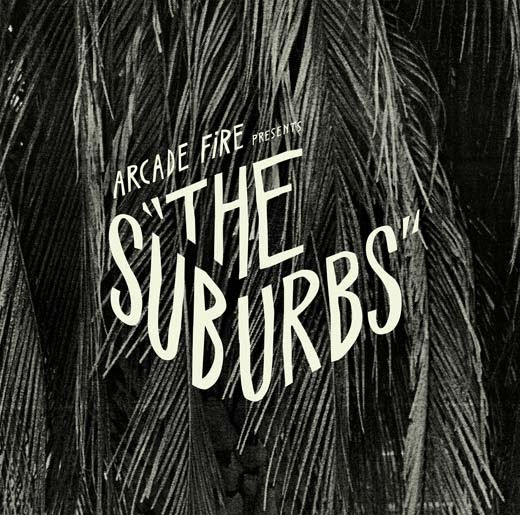
Arcade Fire [2010] The Suburbs

[01] The Suburbs
[02] Month Of May


rollingstone: "2009, 2010/Wanna make a record how I felt then," sings Win Butler on "Month of May." As usual, the Arcade Fire frontman is feeling a lot. Childhood nostalgia, suburban ennui, parenthood, war, death – these are just some of the themes crammed into the songs on Arcade Fire's fabulous new double-sided 12-inch single. "The Suburbs" is a piano-fueled shuffle that starts dreamy and then turns vaguely paranoid as it looks back at a teenage wasteland with longing and amusement: "You always seemed so sure/That one day we'd be fighting/In a suburban war. . . ./But by the time the first bombs fell/We were already bored." "Month of May" is a furious punk boogie about disaffected kids that suggests a Crazy Horse-backed Neil Young shaking a fist at America's listless youth. Both songs reveal a band looking more and more like Springsteen's and U2's rightful heirs, with an undiminished appetite for grandeur – big themes, big emotions and an even more potent sound.
(rollingstone 8/10)

Arcade Fire [2007] Neon Bible

[01] Black Mirror
[02] Keep The Car Running
[03] Neon Bible
[04] Intervention
[05] Black Waves - Bad Vibrations
[06] Ocean Of Noise
[07] The Well And The Lighthouse
[08] (Antichrist Television Blues)
[09] Windowsill
[10] No Cars Go
[11] My Body Is A Cage


amg: When Montreal's Arcade Fire released Funeral in 2004, it received the kind of critical and commercial acclaim that most bands spend their entire careers trying to attain. Within a year the group was headlining major festivals and sharing the stage with U2 and New York City's "two Davids" (Bowie and Byrne), all the while amassing a devoted following that descended upon shows like sinners at a tent revival, engaging in the kind of artist appreciation that can easily turn to a false sense of ownership. On their alternately wrecked and defiant follow-up, Neon Bible, one can sense a bit of a Wall being erected (Win Butler's Roger Waters/Bruce Springsteen/Garrison Keillor-style vocal delivery notwithstanding) around the group. If Funeral was the goodbye kiss on the coffin of youth, then Bible is the bitter pint (or pints) after a long day's work. The brooding opener, "Black Mirror," with its sinister "Suffragette City"-inspired groove and murky refrain of "Mirror, Mirror on the wall/Show me where them bombs will fall," sets an immediate world-weary tone that permeates that majority of Neon Bible's Technicolor pages. As expected, those sentiments are amplified with all of the majestic and overwrought power that has divided listeners since the group's ascension to indie rock royalty, but despite a tendency toward midtempo balladry and post-fame cynicism, they're anything but dull. It's the triumphant orchestral remake of live staple "No Cars Go" and the infectious "Keep the Car Running" — the latter sounds like a 21st century update of John Cafferty & the Beaver Brown Band's "On the Dark Side" — that will most appeal to Funeral fans, and when the bottom drops out a minute and a half into the pipe organ-led "Intervention" and Butler wails "Who's gonna reset the bone," it's hard not get caught up in all of the dystopian fervor. "Black Wave/Bad Vibrations" and "The Well and the Lighthouse" continue the band's explorations into progressive song structures and lush mini-suites, the thunder-filled "Ocean of Noise" is reminiscent of Bossanova-era Pixies, and the stark (at first) closer "My Body Is a Cage" straddles the sawhorse of earnest desperation and classic rock & roll self-absorption so effortlessly that it demands to be either turned off or all the way up. Neon Bible takes a few spins to digest properly, and like all rich foods (orchestra, harps, and gospel choirs abound), it's as decadent as it is tasty — theatricality has never been a practice that the collective has shied away from — but there's no denying the Arcade Fire's singular vision, even when it blurs a little.
(amg 8/10)

Arcade Fire [2004] Funeral

[01] Neighborhood #1 (Tunnels)
[02] Neighborhood #2 (Laika)
[03] Une Annee Sans Lumiere
[04] Neighborhood #3 (Power Out)
[05] Neighborhood #4 (7 Kettles)
[06] Crown Of Love
[07] Wake Up
[08] Haiti
[09] Rebellion (Lies)
[10] In The Backseat


amg: Fronted by the husband-and-wife team of Win Butler and Régine Chassagne, the Arcade Fire's emotional debut — rendered even more poignant by the dedications to recently departed family members contained in its liner notes — is brave, empowering, and dusted with something that many of the indie-rock genre's more contrived acts desperately lack: an element of real danger. Funeral' s mourners — specifically Butler and Chassagne — inhabit the same post-apocalyptic world as London Suede's Dog Man Star; they are broken, beaten, and ferociously romantic, reveling in the brutal beauty of their surroundings like a heathen Adam & Eve. "Neighborhood #1 (Tunnels)," the first of four metaphorical forays into the geography of the soul, follows a pair of young lovers who meet in the middle of the town through tunnels that connect to their bedrooms. Over a soaring piano lead that's effectively doubled by distorted guitar, they reach a Lord of the Flies-tinged utopia where they can't even remember their names or the faces of their weeping parents. Butler sings like Radiohead's Jonny Greenwood used to play, like a lion-tamer whose whip grows shorter with each and every lash. He can barely contain himself, and when he lets loose it's both melodic and primal, like Berlin-era Bowie or British Sea Power. "Neighborhood #2 (Laïka)" examines suicidal desperation through an angular Gang of Four prism; the hypnotic wash of strings and subtle meter changes of "Neighborhood #4 (7 Kettles)" winsomely capture the mundane doings of day-to-day existence; and "Neighborhood #3 (Power Out)," Funeral's victorious soul-thumping core, is a goose bump-inducing rallying cry centered around the notion that "the power's out in the heart of man, take it from your heart and put it in your hand." The Arcade Fire are not bereft of whimsy. "Crown of Love" is like a wedding cake dropped in slow motion, utilizing a Johnny Mandel-style string section and a sweet, soda-pop stand chorus to provide solace to a jilted lover yearning for a way back into the fold, and "Haiti" relies on a sunny island melody to explore the complexities of Chassagne's mercurial homeland. However, it's the sheer power and scope of cuts like "Wake Up" — featuring all 15 musicians singing in unison — and the mesmerizing, early-Roxy Music pulse of "Rebellion (Lies)" that make Funeral the remarkable achievement that it is. These are songs that pump blood back into the heart as fast and furiously as it's draining from the sleeve on which it beats, and by the time Chassagne dissects her love of riding "In the Backseat" with the radio on, despite her desperate fear of driving, Funeral's singular thread is finally revealed; love does conquer all, especially love for the cathartic power of music.
(amg 9/10)
Arcade Fire [2003] Arcade Fire

[01] Old Flame
[02] I'm Sleeping in a Submarine
[03] No Cars Go
[04] The Woodland National Anthem
[05] My Heart is an Apple
[06] Headlights Look Like Diamonds
[07] Vampire, Forest Fire


amg: As far as debuts go, the Arcade Fire's seven-song introduction to the world will forever be lorded over by its behemoth older sibling, 2004's commercially and critically lauded Funeral. While the hundreds of people who coveted the self-titled EP prior to its 2005 re-release on the ultra-hip Merge label can rest assured that their copies are indeed original, those who are looking for a prequel to the anthemic, end-of-the-world bombast that emanated like a black-box recorder from Funeral are in for a treat. While there's nothing here that matches the goosebump-inducing electricity that runs through "Tunnels" or "Power Out," there are moments — both musical and lyrical — that portend the fireworks to come. "Old Flame" starts things off innocently enough with a simple melody tied to the even simpler pangs of new love — "My mouth is full/Your heart is an apple" — and "I'm Sleeping in a Submarine" extends that joy with a defiant chorus of "A cage is a cage, is a cage, is a cage!" However, it isn't until the third track that the record begins to take shape — "No Cars Go," with its driving accordion melody line and unified shouts, sounds like the blueprint for Funeral's "Rebellion (Lies)." Régine Chassagne does little to escape the Björk comparisons on the sparse "Woodlands National Anthem," but her distorted, blood-curdling howls on the pulsing "Headlights Look Like Diamonds" are one of the EP's highlights. By the time the listener arrives at "Vampire/Forest Fire," with its familiar themes of pain both spiritual and familial, it's obvious where the band is headed. Like Broken Social Scene or the Flaming Lips, the Arcade Fire are sometimes earnest to a fault. While each of the seven tracks contained herein are fully realized, they are as unfocused as they are beautiful, resulting in an intangible, dreamlike atmosphere that reduces each cut — no matter how deep — down to a mere scratch.
(amg 7/10)