Showing posts with label 1990-1994. Show all posts

Ali Farka Toure [1994] Talking Timbuktu

With Ry Cooder

[01] Bonde
[02] Soukora
[03] Gomni
[04] Sega
[05] Amandrai
[06] Lasidan
[07] Keito
[08] Banga
[09] Ai Du
[10] Diaraby


amg: Guitarist Ali Farka Touré has repeatedly bridged the gap between traditional African and contemporary American vernacular music, and this release continues that tradition. The CD features him singing in 11 languages and playing acoustic and electric guitar, six-string banjo, njarka, and percussion, while teaming smartly with an all-star cast that includes superstar fusion bassist John Patitucci, session drummer Jim Keltner, longtime roots music great Ry Cooder (who doubled as producer), venerable guitarist Gatemouth Brown, and such African percussionists and musicians as Hamma Sankare on calabash and Oumar Touré on congas.
(amg 6/10)

Aerosmith [1994] Big Ones

[01] Walk On Water
[02] Love In An Elevator
[03] Rag Doll
[04] What It Takes
[05] Dude (Looks Like A Lady)
[06] Janie's Got A Gun
[07] Cryin'
[08] Amazing
[09] Blind Man
[10] Deuces Are Wild
[11] The Other Side
[12] Crazy
[13] Eat The Rich
[14] Angel
[15] Livin' On The Edge
[16] Dude (Looks Like A Lady) (Live)


amg: Big Ones serves up the hits and nothing but the hits; Aerosmith's excellent debut for Geffen, Done with Mirrors, is conveniently overlooked. So what's left is some of the finest mainstream hard rock of the late '80s and early '90s — the fruits of one of the most remarkable comebacks in rock & roll history. Unfortunately, there's precious little of the classic Aerosmith raunch; in fact, the two new tracks are the hardest, slinkiest tracks here. Otherwise, the up-tempo tracks bog down in over-production ("Love in an Elevator"), and the frequently embarrassingly overwrought power ballads ("Angel" and "Crazy") dominate too much of the album. So what's left? The band's best stab at social commentary ("Janie's Got a Gun"), a sublime slinky throwaway ("Deuces Are Wild"), deliciously sleazy blues-rockers ("Rag Doll," "[Dude] Looks Like a Lady"), and their best ballads ("What It Takes" and "Cryin'").
(amg 9/10)

Alvin Lee [1994] Zoom

[01] A Little Bit Of Love
[02] Jenny Jenny
[03] Remember Me
[04] Anything For You
[05] The Price Of This Love
[06] Real Life Blues
[07] It Don't Come Easy
[08] Lost In Love
[09] Wake Up Moma
[10] Moving The Blues
[11] Use That Power


amg: Released in Europe on Castle Communications and distributed in the U.S. on Domino Entertainment, a label founded by producer Rob Fraboni, the album's tracks were all shuffled into a different order except for "A Little Bit of Love," "It Don't Come Easy," and "Use That Power." An oddity, but you could put the CD in your player on the shuffle setting and it would remain one of journeyman Alvin Lee's finest statements. The stellar track here is "Real Life Blues," which hit in spots around the states, notably in Texas and in Massachusetts. It was a Top 30 hit on the Billboard charts in Boston when the regional papers published such tracking. The track featured the unmistakable sound of George Harrison on slide guitar and Deep Purple keyboard player Jon Lord. This is a wiser, slower, more methodical sentiment than we once heard Lee make on "I'd Love to Change the World." A 16 page booklet accompanies the cover photo (the bull's eye on Lee's guitar), it's the other side of the flash guitar Lee's been known for. "A Little Bit of Love" is Ten Years After meets Power Station with thunderous drums and very smooth production. Steve Gould and Deena Payne's backing vocals chirp over Alan Young's boom-boom drumbeat on "The Price of Love," a bonafide dance tune that cries for the kind of production that the band Chic made famous — dance blues. "Moving the Blues" is a fun, Delaney & Bonnie type rocker with Clarence Clemons on tenor sax. Clemons appears on four tracks, including "Use That Power," "Jenny, Jenny" — a Little Richard meets Mitch Ryder by way of Chuck Berry fun stomper — and the funky "Wake Up Moma" which has that trademark Jon Lord keyboard filling in nicely. The instrumental "Lost in Love" is very tasteful. This is a major '60s/'70s figure making music on his own terms and it is very satisfying.
(amg 8/10)

Auteurs [1994] Now I'm Your Cowboy

[01] Lenny Valentino
[02] Brainchild
[03] I'm A Rich Man's Toy
[04] New French Girlfriend
[05] The Upper Classes
[06] Chinese Bakery
[07] A Sister Like You
[08] Underground Movies
[09] Life Classes - Life Model
[10] Modern History
[11] Daughter Of A Child


amg: "Brainchild" may have informed the title of the Auteurs' sophomore album, Now I'm a Cowboy, but it was the sneering, in-with-the-hip-crowd antics of the opening "Lenny Valentino" which flew in the face of the light retro-pop the band wielded just a year earlier. Rougher, sexier, more slipshod than before, this song had a lot to say, and the band was right behind it. But that's not to imply that the band didn't carry itself with equal aplomb across the rest of the set. The Auteurs blazed through a mixed mutant bag of smoothies and deadlies, where every title read like a trip around the world. Meanwhile, pre-empting all that Pulp would later perfect, Luke Haines' feral lyricism touched on the struggle of upper and lower classes and the horror that falls when they collide. "New French Girlfriend" hashed Haines' vocals to bits with a yummy guitar, while "Chinese Bakery" is an off-kilter rock rampage across streets that slice uptown and downtown, leaving "The Upper Classes" to fill the breach. Elsewhere, both "Life Classes/Life Model" and the sordid claustrophobia of "Underground Movies" emerge as biting commentary. Now I'm a Cowboy served the Auteurs well, becoming an edgily delicious bridge between their immediate past and their enduring future. Dig a little deeper and add a pinch of hindsight, however, and it's also easy to discern the treasure trove of embryonic nuggets that would surface in Haines' Baader Meinhof and Black Box Recorder solo projects.
(amg 8/10)

Asia [1994] Aria

[01] Anytime
[02] Are You Big Enough
[03] Desire
[04] Summer
[05] Sad Situation
[06] Don't Cut The Wire (Brother)
[07] Feels Like Love
[08] Remembrance Day
[09] Enough's Enough
[10] Military Man
[11] Aria
Bonus Track
[12] Reality


amg: Geoff Downes, Steve Howe, and Carl Palmer surprised everyone when they re-formed Asia in 1992, with a new singer (John Payne) and a second guitarist (Al Pitrelli). Even more surprising was the fact that Aqua — the album no one had been expecting — was quite impressive, arguably superior to its three predecessors. What could easily have been an isolated one-shot experience turned into a continuing success story when Downes returned to the studios two years later, but without Howe and Palmer. The latter was replaced by drummer Michael Sturgis. Howe, of course, could not be "replaced" (that would have been an insult to his talent) — so Pitrelli thus became the sole guitarist of the band. Asia, now a quartet, nonetheless managed to release yet another amazing album. This is in most part due to Payne's vocals and Downes' creative mind. The album does start off with a few weaknesses, but as the music flows and you move deeper into the tracks, melodies become richer and more intricate, and the lyrics more interesting. The fourth track, "Summer," is a great song; "Sad Situation" is a marvel; and "Don't Cut the Wire" a work of art. The second half of the record is near-perfect, from the romantic "Feels Like Love" to the symphonic "Aria," which makes for a great finale. The weakest part is the chorus of "Enough's Enough." A great investment, if you like this type of music.
(amg 6/10)

Al Jarreau [1994] Tenderness

[01] Mas Que Nada
[02] Try A Little Tenderness
[03] Your Song
[04] My Favorite Things
[05] She's Leaving Home
[06] Summertime
[07] We Got By
[08] Save Your Love For Me
[09] You Don't See Me
[10] Wait For The Magic
[11] Dinosaur
[12] Go Away Little Girl


amg: Rather than do a strictly studio or strictly live album next, Jarreau recorded a "live in the studio" affair before an invited audience — and this time he would not be bothered with the latest new mediocre R&B tunes. Spreading his net from the Gershwins through Lennon-McCartney to Jorge Ben, Elton John and himself, Jarreau assembled a core band that includes vets like Joe Sample, Steve Gadd, the late Eric Gale, and producer Marcus Miller and turned himself loose on the songs with a freedom that hasn't been heard extensively on his records since the '70s. As then, he transplants standards of whatever school into his own cross-genre idiom, squeezing his tone through the syllables and flashing his speed scatting. He produces some lovingly drawn-out reprises of "She's Leaving Home" and "We Got By," a semi-funk "Summertime" with echoes of Gil Evans in the horns, and fits into the rapid-fire "Mas Que Nada" in the Brazilian manner-born. Opera diva Kathleen Battle's breathless coloratura soprano makes for an odd, unsettling contrast with Jarreau's snake-like wanderings in "My Favorite Things" (the only track recorded at a separate session in New York; the others were cut in L.A.); Michael Brecker's tenor sax adds a third alien voice to the mix. Those who were first drawn to Jarreau from his live and recorded performances of the mid-'70s are going to like this CD — and this time, the new material ("Wait for the Magic," "Dinosaur") is not only interesting and thought-provoking, it makes good use of Jarreau's voice. As with Live In London, a home video of the sessions is available, but contains only ten tracks
(amg 8/10)

Aztec Camera [1993] Covers And Rare

[01] Back On Board
[02] All I Need Is Everything
[03] Jump
[04] Set The Killing Free
[05] Consolation Prize
[06] True Colors
[07] (If Paradise Is) Half As Nice [WANTED]
[08] We Could Send Letters
[09] Salvation
[10] Deep And Wide And Tall
[11] Bad Education
[12] Good Morning Britain
[13] Walk Out To Winter [WANTED]
[14] The Red Flag
[15] Do I Love You

With [05] Edwyn Collins [07] Andy Fairweather-Low [12] Mick Jones


amg: Aztec Camera's Covers & Rare is mainly for the group's fans; however, the album can also be utilized as an introduction to the Scottish band. Some of their finest tracks — "Back on Board," "All I Need Is Everything," "Walk Out to Winter" — are included here, albeit in different versions. Anybody who hasn't heard the bright, poetic songwriting and soulful croon of Roddy Frame (vocals, guitar) can see why Aztec Camera has always acquired critical praise. "Walk Out to Winter," an engaging tale of romantic discontent, was one of the best songs on the debut LP, High Land, Hard Rain. On Covers & Rare, the track becomes an epic with a glorious instrumental intro that is more than five minutes long. Taken from the 12" vinyl, "Walk Out to Winter (Extended Version)" easily surpasses the original. Chiming synths add charm to "Deep and Wide and Tall." The live performances of "Back on Board" and "We Can Send Letters" lack the soaring emotions of the studio renditions on High Land, Hard Rain, but they're still moving ballads. The folk-rock remake of Van Halen's "Jump" is hilariously irreverent. Frame sings the heavy metal lyrics with a country drawl, and then the acoustic riffs climax into a barrage of guitar feedback. While "Jump (Loaded Version)" will probably offend Van Halen purists — that was probably Frame's intention — the cover of Cyndi Lauper's "True Colors" is poignant and beautiful. The sunny "(If Paradise Is) Half as Nice" and the stinging "Bad Education" should've been included on Aztec Camera's previous albums. Covers & Rare offers devotees plenty to feast on, and strangers to Frame's talent will be similarly aching for more when it's over.
(amg 8/10)

Aztec Camera [1993A] Dreamland

[01] Birds
[02] Safe In Sorrow
[03] Black Lucia
[04] Let Your Love Decide
[05] Spanish Horses
[06] Dream Sweet Dreams
[07] Pianos And Clocks
[08] Sister Ann
[09] Vertigo
[10] Valium Summer
[11] The Belle Of The Ball


amg: Whoever got the idea of putting erstwhile lo-tech pop hero Roddy Frame in the studio with the legendarily hi-tech keyboardist/composer/producer Ryuichi Sakamoto ought to at least get credit for thinking outside the box. And if the experiment wasn't an unqualified success, well, that's what usually happens when you think outside the box. Dreamland is far from a failure; by this point in his career, Frame's pop craft is too instinctive to permit that. But Sakamoto does occasionally threaten to overwhelm the songs with his patented super-smooth production and studio fripperies (those strings! those backing vocals!), and in a few cases the songs themselves aren't structurally capable of supporting all that added weight. Several tracks, in particular the rather silly "Spanish Horses," will leave you thinking "Gosh, that was pretty. How did it go again?" And "Safe in Sorrow," a gorgeous pop/soul ballad, feels like it wants to go twice as fast as it does, but can't. All that said, there are some great moments here, including the aching "Let Your Love Decide" and the slightly creepy "Valium Summer"; fans of the Camera should like this album just fine.
(amg 6/10)

Auteurs [1993] New Wave

[01] Show Girl
[02] Bailed Out
[03] American Guitars
[04] Junk Shop Clothes
[05] Don't Trust The Stars
[06] Starstruck
[07] How Could I Be Wrong
[08] Housebreaker
[09] Valet Parking
[10] Idiot Brother
[11] Early Years
[12] Home Again


amg: With their 1993 debut album, New Wave, the Auteurs established themselves as one of England's best guitar bands of the early '90s. Driven by the bittersweet, ironic songwriting of Luke Haines, the band's carefully crafted, three-minute pop songs are in the vein of the Kinks, the Smiths and the Beatles, particularly the songs of George Harrison. Yet the band never sounds like imitators — they combine their influences into a signature sound, distinguished by Haines' sharp lyrics and sighing melodies.
(amg 9/10)

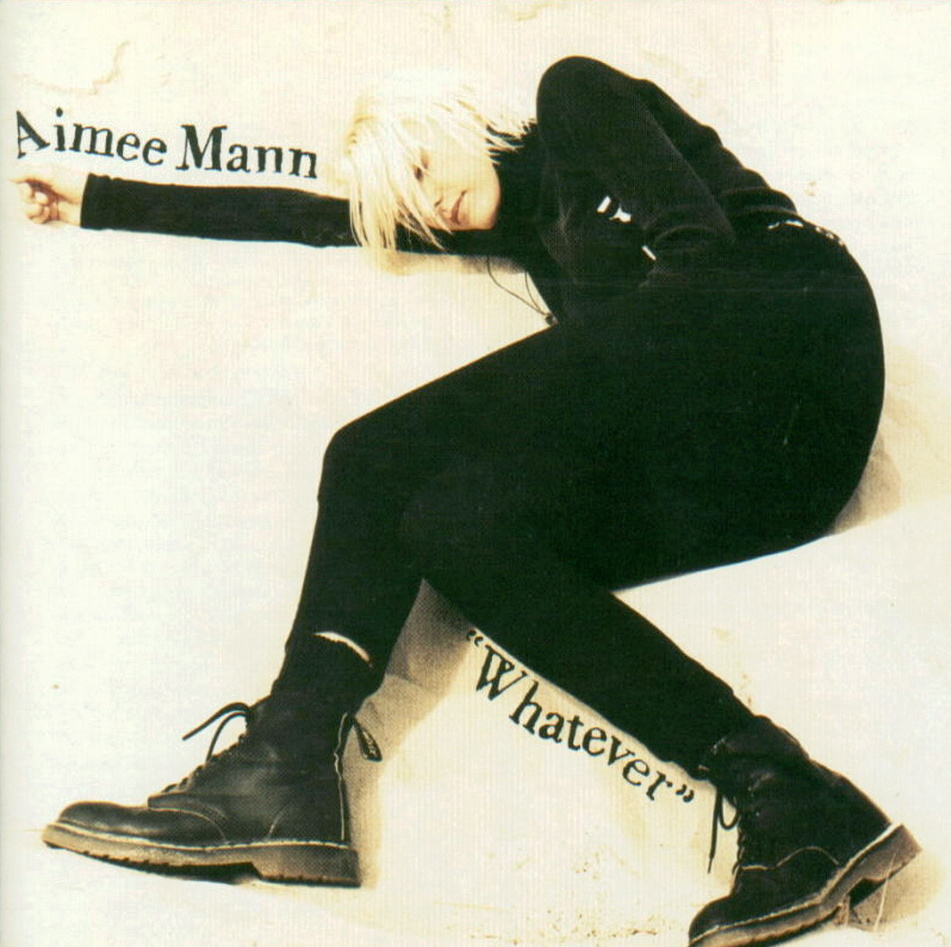
Aimee Mann [1993] Whatever

[01] I Should've Known
[02] Fifty Years After The Fair
[03] 4th Of July
[04] Could've Been Anyone
[05] Put Me On Top
[06] Stupid Thing
[07] Say Anything
[08] Jacob Marley's Chain
[09] Mr. Harris
[10] I Could Hurt You Now
[11] I Know There's A Word
[12] I've Had It
[13] Way Back When


amg: On her solo debut Whatever, the former vocalist for Til Tuesday cements her position as a center-stage artist and top-notch songwriter, and Aimee Mann's blend of wit, smarts, cynicism, and downright humability make for a wonderfully pleasing collection of catchy songs. Musically, the jangle-pop feel of Whatever harkens back to the Beatles and the Byrds but without forsaking its contemporary origin. Lyrically, it is often hard to know whether Mann is spilling her guts out over a love or a deal gone bad. In fact, it is often a combination. But the seamless ease with which she tells the tales, moving from her head to her heart and back again, exposes her mighty talent. Teaming with some of her former bandmates, including longtime collaborator Jon Brion, gives Mann a comfort and a sure footing from which to climb and stretch, which she does with certainty. "I Should've Known," "Could've Been Anyone," and "Say Anything" get the heads bobbing, while the more somber "4th of July" and "Stupid Thing" will beckon forth even the loneliest of hankies. And how many artists pay tribute to Charles Dickens? (Witness "Jacob Marley's Chain.") Talk about literate songwriters and you have to speak of Aimee Mann. The dismissive tone of the title belies the time that was put into this album, for even after its recording, it took Mann quite a long while to find a home. Initially released on Imago Records, Whatever was later reissued by Geffen Records.
(amg 9/10)

Afghan Whigs [1993] Gentlemen

[01] If I Were Going
[02] Gentlemen
[03] Be Sweet
[04] Debonair
[05] When We Two Parted
[06] Fountain And Fairfax
[07] What Jail Is Like
[08] My Curse
[09] Now You Know
[10] I Keep Coming Back
[11] Brother Woodrow - Closing Prayer


amg: The Afghan Whigs' sound was growing larger by the release during the days on Sub Pop, so the fact that Gentlemen turned out the way it did wasn't all that surprising as a result ("cinematic" was certainly the word the band was aiming for, what with credits describing the recording process as being "shot on location" at Ardent Studios). While Gentlemen is no monolith, it is very much of a piece at the start. While "If I Were Going" opens things on a slightly moodier tip, it's the crunch of "Gentlemen," "Be Sweet," and "Debonair" that really stands out, each of which features a tightly wound R&B punch that rocks out as much as it grooves, if not more so. Greg Dulli's lyrics immediately set about the task of emotional self-evisceration at the same time, with lines like "Ladies, let me tell you about myself — I got a dick for a brain" being among the calmer points. The album truly comes into its own with "When We Two Parted," though, as sad countryish guitars chime over a slow crawling rhythm and Dulli's quiet-then-anguished detailing of an exploding relationship. From there on in, things surge from strength to greater strength, sometimes due to the subtlest of touches — the string arrangement on "Fountain and Fairfax" or the unexpected, resigned lead vocal from Scrawl's Marcy Mays on "My Curse," for instance. Other times, it's all the much more upfront, as "What Jail Is Like," with its heartbroken-and-fierce combination of piano, feedback, and drive building to an explosive chorus. Dulli's blend of utter abnegation and masculine swagger may be a crutch, but when everything connects, as it does more often than not on Gentlemen, both he and his band are unstoppable.
(amg 9/10)

Asia [1992] Aqua

[01] Aqua
[02] Who Will Stop The Rain
[03] Lay Down Your Arms
[04] Heaven On Earth
[05] Someday
[06] Crime Of The Heart
[07] A Far Cry
[08] Back In Town
[09] Don't Call Me
[10] Love Under Fire
[11] The Voice Of Reason
[12] Aqua II


amg: Asia hadn't released an album of new music since 1985, so changes were to be expected. But changes for the better — well, that was a pleasant surprise. Aqua found the band infused with new energy, represented by a younger generation of arena rockers in bassist/vocalist John Payne and guitarist Al Pitrelli. Although Payne doesn't invite comparison to John Wetton or Greg Lake (his voice tends to get rougher as it gets louder), he gets the job done and turns out to be a pretty good songwriter in the bargain. Pitrelli, who had recently worked with Alice Cooper, knows his rock guitar; he's no replacement for Steve Howe, but he doesn't have to be — Howe makes guest appearances throughout the disc. Aqua is an amalgam of arena rock and hair metal that avoids sounding sappy or self-pitying, two adjectives that would describe Alpha or Astra. Geoff Downes (who continues to write much of the material) keeps the music punchy and professional; gone are the dated synthesizers of the '80s, replaced by cutting-edge keyboards and savvy production. The opening and closing instrumentals, "Aqua I" and "Aqua II," show just how far Downes had come since Astra. The rest of the songs are pretty much of a piece; written with outside collaborators in many cases, they tend to be either moody ballads or hard-driving numbers about love and war (some things never change). "Who Will Stop the Rain?" was chosen as the single; it didn't chart (neither did Aqua), but it's as good a track as you'll find here. "Heaven and Earth" (apparently tested as the second single) is another standout track, shifting from a ballad to an all-out rocker that sounds like Yes' music from the '90s. "Someday" and "The Voice of Reason" are other tracks that represent the album well, and have since been added to their concert repertoire. After ten years and two label changes, Asia finally produced a suitable follow-up to their first album. Few fans remained in the seats to hear it, but those interested in a delayed encore from the band should skip to Aqua.
(amg 6/10)

Annie Lennox [1992] Diva

[01] Why
[02] Walking On Broken Glass
[03] Precious
[04] Legend In My Living Room
[05] Cold
[06] Money Can't Buy It
[07] Little Bird
[08] Primitive
[09] Stay By Me
[10] The Gift
[11] Keep Young And Beautiful


amg: Those expecting Annie Lennox to come out full-guns-blazing for her solo debut, Diva, with the high energy electro-Europop-meets-American- R&B of her Eurythmics work may have to wind their pacemakers down a notch. The enigmatic vocalist who made a career toying with different notions of gender plays on the concept of fame here — Lennox dresses up in the persona of a solitary Diva trapped by counterfeit glory. The framework offers an effective stage for Lennox's husky voice, showcasing her as much more of a chanteuse than in the past. But the music is strangely muted and understated. In fact, the album almost works best as one integrated mood piece rather than a collection of individual songs. While Lennox succeeds in carving out a personality distinct from her Eurythmics days with Diva, one can't help but crave a shot of former partner Dave Stewart's musical muscle.
(amg 8/10)

Afghan Whigs [1992] Congregation

[01] Her Against Me
[02] I'm Her Slave
[03] Turn On The Water
[04] Conjure Me
[05] Kiss The Floor
[06] Congregation
[07] This Is My Confession
[08] Dedicate It
[09] The Temple
[10] Let Me Lie To You
[11] Tonight
[12] Milez Iz Ded (Unlisted Track)


amg: The grunge era's most overlooked masterpiece, Congregation was the Afghan Whigs' breakthrough album, an incendiary and insidious set which bridges the gap between the noisy aggression of the band's early releases and the soulful swagger of their later work. Slipping with ominous ease into the sinister, self-obsessed Lothario guise which would serve him so well from here on out, Greg Dulli announces his arrival as a truly magnetic presence — by turns predator ("Tonight") and prey ("I'm Her Slave"), he's the guy your parents always warned you about, delivering each syllable of his remarkable lyrics with equal measures of innuendo and venom. Equally startling is the Whigs' musical growth — while still unmistakably a member of the Sub Pop stable, there's a greater maturity and depth to their sinewy sound, with a newfound grasp of mood and nuance on tracks like the opening "Her Against Me" and "Let Me Lie to You" — the wah-wah guitar which dominates "Turn On the Water," meanwhile, offers the first taste of the funk ambitions to follow. It was hardly a surprise when the Whigs jumped to Elektra soon after — Congregation was clearly their ticket to the big leagues.
(amg 9/10)

Abba [1992] Gold - Greatest Hits

[01] Dancing Queen
[02] Knowing Me, Knowing You
[03] Take A Chance On Me
[04] Mamma Mia
[05] Lay All Your Love On Me
[06] Super Trouper
[07] I Have A Dream
[08] The Winner Takes It All
[09] Money, Money, Money
[10] S.O.S.
[11] Chiquitita
[12] Fernando
[13] Voulez Vous
[14] Gimme! Gimme! Gimme! (A Man After Midnight)
[15] Does Your Mother Know
[16] One Of Us
[17] The Name Of The Game
[18] Thank You For The Music
[19] Waterloo


amg: ABBA's 19-song Gold collection was the first hits compilation prepared specifically for the CD format by the 1970s supergroup, and, appearing after a period of several years in which their music had been off the market, was a welcome addition to the catalog. It is still the simplest and most straightforward collection of the group's material that it is possible to buy.
(amg 10/10).

Asphalt Ribbons [1991] Passion, Coolness, Indifference, Boredom, Mockery, Contempt, Disgust

[01] Downside
[02] The Big Silence
[03] A Time To Go
[04] Think Of London


wiki: In 1991, Asphalt Ribbons relocated to London and shifted position again, this time to the pre-Tindersticks line-up featuring Stuart Staples (vocals), David Boulter (organ and accordion), Neil Fraser (guitar), Dickon Hinchliffe (guitar and strings), Al Macaulay (percussion and drums) and John Thompson (bass). "Passion, Coolness, Indifference ..." was recorded at this time.
(rateyourmusic 7/10)

Asphalt Ribbons [1991] Old Horse

[01] Rosemarie
[02] Old Horse
[03] State Inside
[04] Distance Between Us
[05] Strong Hands
[06] Downside


rateyourmusic: Tindersticks before they became Tindersticks. Interesting stuff. A band in the years of becoming, searching for their own voice and style. A rootsy effort, a bit like the alternative country/rock bands of the early 90's. The songs are played pretty fast, with a lot of energy, unlike the Tindersticks slow style with a lot of space and atmosphere. Some nice songs here, and Stuart Staples voice is as characteristic as ever. Two years down the road and Tindersticks would release their debut epic masterpiece.
(rateyourmusic 7/10)

Ali Farka Toure [1990] The River

[01] Heygana
[02] Goydiotodam
[03] Ai Bine
[04] Tangambara
[05] Toungere
[06] Jungou
[07] Kenouna
[08] Boyrei
[09] Tamala
[10] Lobo
[11] Instrumental


amg: This 1990 recording contains one of the best African blues tunes ever recorded, and a classic Ali Farka Toure moment. As the electric guitar roars in at the opening, punctured by a darting harmonica line, "Heygana" lays out the roots and branches of the blues in its journey from west Africa to the Americas, and more importantly, back again. Sung in the Songhai language, pushed by a vaguely reggae groove and pulled along by a sometimes idiosyncratic percussion line on a calabash, it pretty well epitomizes what Toure is about. The sound is stripped down, with the guitar and voice working a bare minimum groove. The calabash clicks, a thick stringed ngoni adds some punch, and a few tracks feature Toure on the njarka (fiddle). In addition to Rory McLeod's harmonica, there is one piece with The Chieftains' Seane Keane and Kevin Conneff on fiddle and bodhran (Irish goatskin drum), and a marvelous duet with saxophonist Steve Williamson that adds a little sideways R&B. The River is one of Toure's most straightforward recordings made in the decade after the light of his international fame had first shone (amazon).
(amg 9/10)

Ac/Dc [1990] The Razor's Edge

[01] Thunderstruck
[02] Fire Your Guns
[03] Moneytalks
[04] The Razors Edge
[05] Mistress For Christmas
[06] Rock Your Heart Out
[07] Are You Ready
[08] Got You By The Balls
[09] Shot Of Love
[10] Let's Make It
[11] Goodbye And Good Riddance To Bad Luck
[12] If You Dare


amg: Although AC/DC's popularity had decreased by the early '90s, the band still had a lot of life left in it. Arguably the Australian headbangers' strongest album in over half a decade, The Razor's Edge is quintessential AC/DC — rowdy, abrasive, unapologetically fun metal full of blistering power chords, memorable hooks, and testosterone-driven lyrics. Lead singer Brian Johnson sounds more inspired than he had since 1983's Flick of the Switch, and lead guitarist Angus Young isn't about to take any prisoners on such hard-hitting material as "Shot of Love," the menacing title song, and the appropriately titled "Got You By the Balls." Although not quite in a class with Back in Black, Highway to Hell, or Let There Be Rock — all of which would, for novices, serve as fine introductions to the distinctive band — The Razor's Edge was a welcome addition to AC/DC's catalog
(amg 6/10)

Adam Ant [1990] Antics In The Forbidden Zone

[01] Zerox
[02] Whip In My Valise
[03] Car Trouble
[04] Kick
[05] Kings Of The Wild Frontier
[06] Antmusic
[07] Dog Eat Dog
[08] Los Rancheros
[09] Killer In The Home
[10] Stand And Deliver
[11] Beat My Guest
[12] Prince Charming
[13] Ant Rap
[14] Desperate But Not Serious
[15] Place In The Country
[16] Friend Or Foe
[17] Goody Two Shoes
[18] Strip
[19] Puss'n Boots
[20] Apollo 9
[21] Vive Le Rock


cduniverse: For those unaware of Adam Ant and his peculiar brand of "Antumusic," a bizarre assortment of Indian and pirate imagery, tribal drums, and twang guitar, Antics in the Forbidden Zone is the place to start. This collection culls the more memorable moments from Ant's kitschy career and presents a fairly complete overview of his image conscious career. Ant's first offerings were rather dour, offering little hint of the camp that was soon to appear. And appear it did, with the galloping "Kings of the Wild Frontier," a pounding effort that along with "Antmusic" highlighted the band's weird world of self-promoting bravado.

"Los Rancheros" bears the distinction of being the only early '80s new wave song to name drop Clint Eastwood. Ant went the inevitable solo route and released his best album, Friend or Foe. "Goody Two Shoes" and the album's title track meld the best of his previously thumping backbeats and reverb guitar into a more conventional pop context. Ant further distanced himself from his pirate dandy image with the none-too-subtle "Strip," whose purpose clearly outlines itself in the title. Since Ant began to flounder as the decade progressed, this collection rightly focuses on his early 80s material.
(amg 9/10).